There is a particular kind of frustration that only happens to experts who are genuinely good at their job.
You watch someone with half your experience win the work. You hear your own ideas repeated back to you at a conference by somebody who is being paid to say them. You get asked to justify a fee that you know is fair, by a client who has already agreed a bigger one with a firm that will do worse work.
None of that is a competence problem. You're not losing because you're not good enough.
You're losing because nobody knows how good you are before they meet you.
This report is about why that happens, and about the five things that fix it, in the order they have to be fixed.
The referral trap
Most established consultants and coaches have built a business that runs almost entirely on referral. That's usually presented as a good thing, and in one sense it is, it means the work is good enough that people pass your name on.
But look at what it actually means.
of consultants generate zero leads from their website in a typical month. Over half say roughly 60% of their business comes through referral alone.
Consulting Success, 2025
Referral is a wonderful way to get clients and a terrible way to grow. Three reasons.
It's capped by other people's memory. You only get referred when somebody happens to be in a conversation where you happen to come to mind. You cannot increase that. You can only wait.
It arrives cold anyway. A referral means someone has vouched for you. It doesn't mean the prospect knows what you do, why you're different, or why you cost what you cost. You still start from near-zero, you just start with permission.
It doesn't compound. Every quarter, you rebuild. Nothing you did last year is still working for you this morning.
Meanwhile, the market is not rewarding quiet excellence. It's rewarding visible expertise, and it's paying a premium for it.
of senior executives said they would pay a premium to work with an organisation that produces high-quality thought leadership. 86% said they'd be more likely to invite that organisation into a tender.
Edelman & LinkedIn, B2B Thought Leadership Impact Report 2024. Sample: 3,484 executives, margin of error ±2.8%.
Read those two numbers together and the situation is quite stark. The people who buy what you sell have told researchers they will pay more for demonstrated expertise. And most experts are demonstrating theirs one conversation at a time, in private, to people who already know them.
The five things
Before any of that, I was a professional rugby player. Elite sport teaches you fast that being good is not enough, you have to be seen to be good. Over the last fifteen years I've written four 'Client Attraction Books' and used every one of them to generate multiple six-figures in client income. I've also worked with numerous coaches, consultants, service providers and experts on the same problem.
What I've come to believe is that being known for what you do isn't one thing. It's five, and they run in a specific order.
Is there one idea you're known for?
Not a list of services. One idea. Something a client could repeat accurately to a colleague eight weeks after meeting you, without notes.
Here's the test that catches most people out: if you asked three of your clients what you're known for, would they all say the same thing? Usually they don't. Usually they each describe the bit of you they happened to buy.
Do you have a way of working you can actually teach?
Most experienced people have a process. Far fewer have one that exists anywhere outside their own head.
The test: could a client draw your process on a napkin from memory? If the answer is no, you don't have a method, you have judgement. Judgement is valuable and it's also unsellable, unteachable, and impossible to write down.
The encouraging part: if you've been getting consistent results for years, the method already exists. It has simply never been named. Which means this isn't a gap you have to go and fill, it's a pattern you have to go and find.
Is it written down and in people's hands?
Can a prospect read your thinking before they meet you? Is there something substantial to find when they Google you the night before?
This is the gap that costs the most, because without it every single relationship starts from nothing and you spend the first half of every meeting establishing that you know what you're talking about.
One caution: there are two kinds of book. A vanity book, written just to have written, and a client-attraction book, engineered to win work. Only the second earns its place, and even then only once you build the machine to put it to work (that's next).
Does any of it work while you sleep?
Plenty of experts have a message, a method and even a book, and no way of catching the people who encounter them.
No capture. No follow-up. Nothing that stays in front of somebody who is interested but not ready. You pay for attention, in time or money, and then you let it walk away.
This is where a book earns its keep, or doesn't. A book on a shelf delivers nothing. The book was never the play, it's the raw material. The play is the machine you build around it: the landing page that gives it away, the follow-up that nurtures every reader, the system that quietly turns interest into booked calls while you sleep. That's what makes the book pay.
Is it compounding?
Are you raising fees? Being invited rather than pitching? Turning work away? Getting approached to speak or comment because of something you put out?
Momentum is what the other four buy you. If you've built them properly, this looks after itself. If you haven't, no amount of effort here will stick.
The bit that actually matters
These five aren't a menu. They're a chain, and you cannot fix a link further down the chain than the one that's broken.
This is the single most useful idea in this report, and it's why so much marketing effort gets wasted.
- If your MESSAGE is unclear, marketing is money poured into a leaky bucket, people can't repeat what you do, so they can't refer you accurately either.
- If your METHOD isn't named, you've got nothing to write a book about. You'd produce something vague that helps nobody, including you.
- If there's no MANUSCRIPT, every conversation starts from zero no matter how good your website is.
- If there's no MACHINE, even a genuinely good book just sits in a drawer generating nothing.
- And MOMENTUM is a consequence, not an activity. You can't do momentum.
So when people ask me where to start, the honest answer is: start at the earliest broken link, not the most obviously broken one.
I meet a lot of experts who are convinced they need better marketing. Usually they need a clearer message. I meet others convinced they need a book. Some of them do. A good number of them need to name their method first and create a 'signature system' around it, because a book written on a half-formed method is worse than no book at all.
A rough test
Answer these five honestly. One point for each yes.
The five-question version
- MESSAGE, Could a client describe what you do, accurately, in one sentence, two months after meeting you?
- METHOD, Could that same client draw your process from memory?
- MANUSCRIPT, Is there something substantial a prospect can read before they meet you?
- MACHINE, Did anything in your business generate an enquiry last month without you chasing it?
- MOMENTUM, Have you raised your fees in the last eighteen months?
0-1: the foundations aren't in place yet, and that's the good news, it's the cheapest thing to fix.
2-3: you're most people. There's one specific link broken and everything downstream of it is being wasted.
4-5: you've built more than most. The gap is probably narrower and more expensive than you think.
Five questions will tell you roughly where you are. They won't tell you which link is broken, and that's the only thing worth knowing, because that's what determines what you do on Monday.
So we built a proper version. It works out the size of your revenue gap, then asks a dozen quick questions across the five, and it takes about four minutes. It gives you a score for each element, tells you which one is holding you back, and, genuinely, tells you if the answer isn't a book.
Roughly half the people who take it shouldn't write one yet. The report says so.
Take the Authority Scorecard
Twelve questions. Four minutes. A score for each of the five, and a written report telling you which link to fix first and how.
Start the Scorecard →Free. No call, no pitch. Your report arrives by email in about five minutes.
One last thing
I should be straight with you about who wrote this.
I run a business that publishes books for experts. So when I tell you a book is powerful, you're entitled to notice that I have a stake in you believing it.
Here's what I'd say to that. I didn't start a publishing business and then decide books were useful. I wrote four of my own, watched each one bring in a multiple six-figure income, spent years being asked how I'd done it, and eventually built a business around answering.
And the reason the scorecard exists, rather than a "book a call" button, is that a book is the third link in a chain of five. If your message isn't clear or your method isn't named, I'd be selling you something that won't work, and you'd rightly tell people so.
Find out which link is broken first. Then decide.
Steve Hackney
The Authority Machine, published by TCA Publishing
The company he keeps
Trusted by the people who make champions
Being the best isn't enough. Being known is. That is as true in elite sport as it is in business, and Steve has lived both, as a former professional rugby athlete (playing for Leicester Tigers, England A, England 7's and the famed Barbarians) and now as the person experts turn to.
The coaches who turn talent into world champions have put their name to his work...
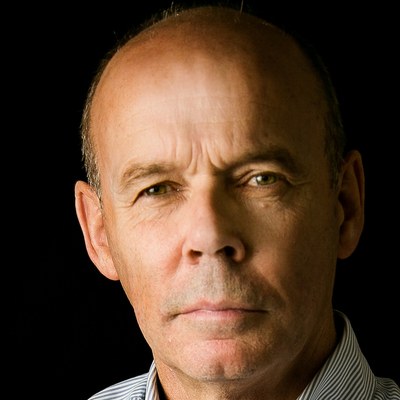
“He has given you what I would call a 'success blueprint'.”
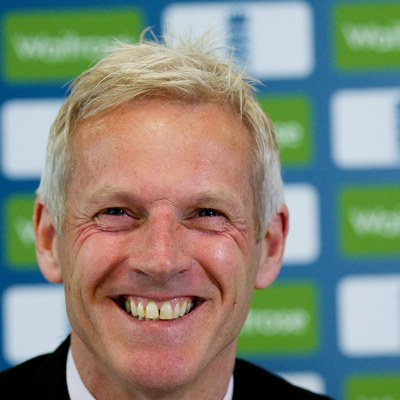
“It will give you the 'point of difference' that we are all hoping to find.”
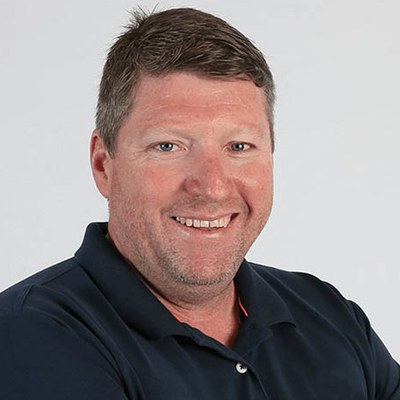
“Steve's work in the boardroom and my work on the water is so similar.”